What if happiness isn’t something you have to chase? What if it’s already inside you and you just forgot how to tap into it?
It sounds cliché, I know. But A Monk’s Guide to Happiness by Gelong Thubten completely shifted how I think about joy, peace, and presence. It’s easily one of the most important books I’ve read and it changed how I see myself and the world around me.
Before you roll your eyes at the word meditation, hear me out. What I learned from this book goes way deeper than just sitting quietly—it’s about remembering who you really are.
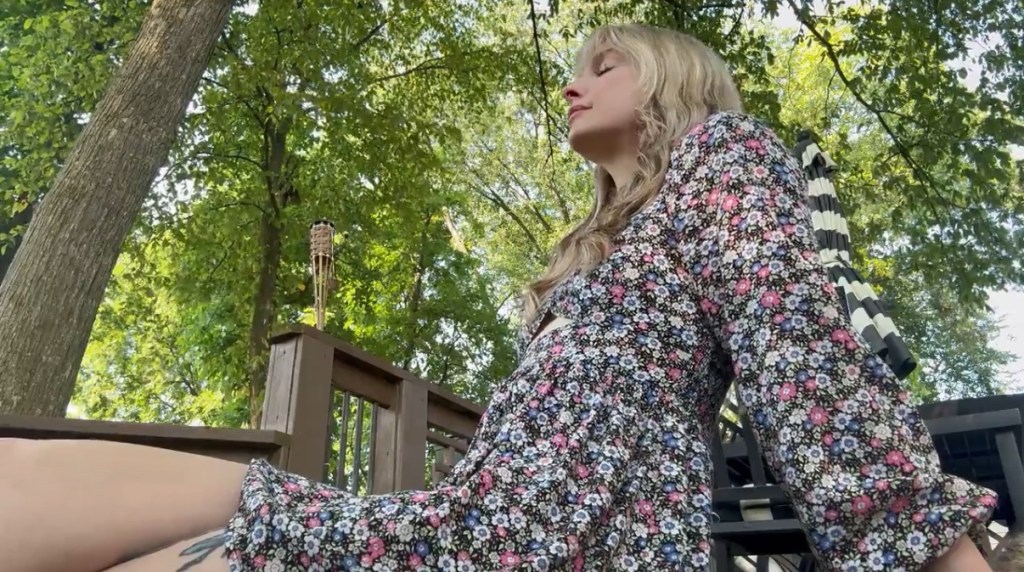
Finding happiness in small mindful moments.
🌙 The Wake-Up Call
Let’s be real. You wake up, scroll your phone, grab your coffee while half-distracted, and before you even brush your teeth, you’ve absorbed the opinions of a hundred strangers online.
You rush through work, eat in the car, come home drained, scroll again, crash, and do it all over tomorrow.
Ever sit there and think, “Wait… this can’t be what life’s about?” Same. That’s exactly why this book hit me so hard.
💬 The Author’s Message
Gelong Thubten is a Buddhist monk who teaches mindfulness all over the world—but not in that rigid “clear your mind” kind of way. His philosophy is simple but powerful:
“Happiness is your natural state. You don’t have to earn it—you just have to remember it.”
At first, I laughed. Okay, monk man… I’ve got bills, trauma, and anxiety—what do you mean happiness is already inside me?
But the more I read, the more it made sense. It felt like he was gently handing me back pieces of myself I didn’t know I’d lost.
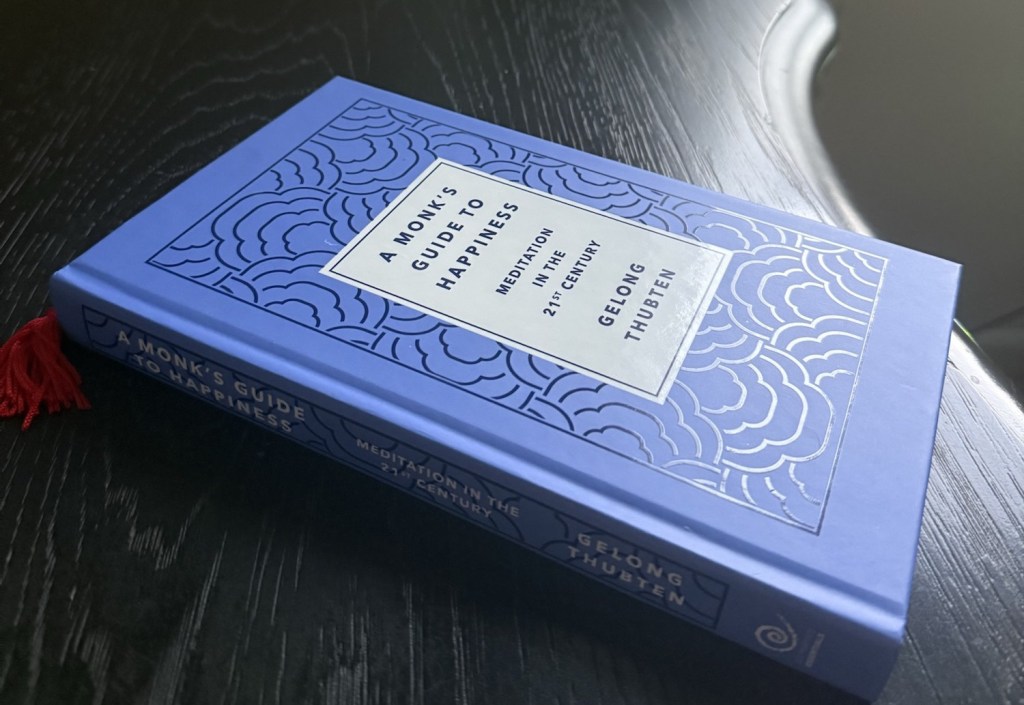
A Monk’s Guide to Happiness by Gelong Thubten on a desk.
🧘♀️ The Core Ideas That Hit Me
We are overstimulated. We consume hundreds of images in minutes. We’re training our brains to crave chaos and distraction.
And we’re not living for the now—we’re living for the if, when, and because.
“I’ll be happy if I get the job.”
“When I lose weight, I’ll feel better.”
“Because I hit my goal, I’ll finally relax.”
But what happens when you get the thing… and it still doesn’t feel like enough?
Thubten calls this “the hunger of seeking.” It’s that endless loop of expectation and fear constantly chasing happiness that never seems to stick.
Then he drops this truth bomb:
“True, enduring happiness is a skill. It’s not a reward or a finish line—it’s something we learn through practice.”
That moment changed everything. Happiness isn’t something I achieve—it’s something I build, one mindful moment at a time.
He compares it to the sky:
“Be the sky, not the clouds.”
The clouds are your thoughts and emotions. The sky is you—always there, always calm, even when storms pass through.
Mindfulness and meditation practice for daily happiness.
🧠 Meditation Myths—Busted
Most people think meditation means emptying your mind. But Thubten says it’s actually about reconnecting to your essence—the part of you that’s already peaceful underneath the noise.
It’s not about forcing stillness. It’s about remembering it.
Meditation isn’t a tool to escape—it’s a way home. Once I saw it that way, I stopped judging myself for “doing it wrong.”
⚡ Powerful Insights to Sit With
We cling to external things for happiness—shopping, validation, aesthetics—and the second we get them, we’re already reaching for the next thing.
We tie our worth to productivity, possessions, and posts. But that’s not who we are.
Thubten breaks down stress into four truths:
Not getting what we want
Getting what we don’t want
Trying to protect what we have
Fearing the loss of what we love
And the twist? Stress isn’t in the situation—it’s in our relationship to it.
Even caffeine, he says, is “borrowing energy from tomorrow.” That hit me hard.
☕ Mini Moments of Mindfulness
One of my favorite takeaways: mini mindfulness moments.
Not full meditations—just small pauses in your day to return to yourself.
Brushing your teeth
Washing your hands
Waiting for coffee to brew
Walking to your car
Admiring nature
Use these tiny moments to breathe, notice, and simply be. They train your brain to be present without needing a whole routine.
I started doing this and it genuinely changed my days. It reminded me that peace doesn’t hide in big spiritual breakthroughs—it lives in the little in-between moments.
Be the sky, not the clouds — mindfulness metaphor from Gelong Thubten.
💖 Final Thoughts
This book reminded me that happiness isn’t a glow-up or a goal. It’s a moment. A choice. A skill.
If this resonates, I can’t recommend A Monk’s Guide to Happiness enough. You can even look up Gelong Thubten’s short meditation techniques online—they’re simple, approachable, and powerful.
Try adding a few mindful pauses into your day this week. Notice how different life feels when you pause instead of power through.
✨ Let’s Talk
Thanks for reading, bestie 🫶 If something here spoke to you, drop a comment below—I’d love to hear what hit home. And if you want more posts on mindfulness, healing, and self-growth, make sure you subscribe and follow me elsewhere so we stay connected.
Have you ever caught yourself thinking: Who even am I anymore? What do I actually like? How did I get to this point?
First—this isn’t a failure. It’s a signal. Growth, grief, survival, expectations, and plain old life can bend us. The fact that you notice is the beginning of rediscovery, and that’s worth celebrating!
Below are ten practical steps to help you reconnect with yourself. These aren’t quick fixes, but small, consistent ways to bring your real self back into the spotlight.
1. Brain Dump Daily
First thing in the morning, write down whatever is in your head for at least three pages. No edits, no filter.
This clears the static so you can move through your day lighter. It helps you spot patterns, understand your desires, and practice journaling. The petty and angry thoughts lose their grip when they’re on paper instead of in your mind.
2. Take Yourself on Weekly Solo Dates
If you’re a people pleaser, solo dates are a game changer. You’ll learn what you actually enjoy without other people’s opinions shaping your choices.
Go thrifting, see a movie, try a new café, or visit a museum. The important part is making time for yourself and noticing what tries to get in the way—friends, family, or your own excuses.
3. Do a Monthly Audit
Once a month, reflect on what worked, what didn’t, and how you can make life easier.
Celebrate small wins so it doesn’t feel like punishment. If you missed a goal, treat it as a lesson instead of a failure. For an easier monthly review, try weekly mini-audits to track progress in real time.
4. Listen to Your Inner Child
Your playful, creative side still exists. It just gets buried under responsibility and “being an adult.”
Notice when you shut down fun ideas or label them silly. Instead, lean into them. Go roller skating, paint, play a game, or do something lighthearted. Often, ignoring your inner child shows up as outbursts or burnout. Honoring it helps you feel whole again.
5. Create Grounding Rituals
Your nervous system craves predictability. When every day feels chaotic/uncertain, your body doesn’t feel safe.
Start small with one habit in the morning or evening, like drinking water right when you wake up or lighting incense before bed. Over time, build up your routines so you always have something to fall back on when life feels heavy.
Most of the time, we stay blocked because of subconscious beliefs like “people will judge me,” “my ideas aren’t good enough,” or “someone else already does it better.”
These beliefs aren’t facts. They usually come from childhood, culture, or fear-based voices. Challenge them, reframe them, and choose better ones. Audacity—not perfection—is what moves dreams forward.
7. Sit With Your Thoughts
Phones, podcasts, and constant entertainment keep us from ever sitting in silence. The problem is, silence is where your true self speaks.
Try driving without music, working out without headphones, or simply staring at a wall. At first it feels uncomfortable, but over time it builds self-awareness and clarity.
8. List 20 Things You Enjoy and Do Them Again
Write a list of things you love but rarely do anymore. Add the last date you did them, then start adding new dates as you bring them back into your life.
This list can also fuel your solo dates and remind you of your joy.
9. Move Your Body Daily
I used to hate exercise, but everything changed when I decided it was part of my identity. Movement doesn’t have to mean the gym—it can be yoga, a walk, or even stretching.
Daily movement clears stagnant energy, boosts your mood, and strengthens your confidence. Start with ten minutes and build from there.
10. Stop Doomscrolling
Constant scrolling depletes your energy, steals your focus, and keeps you comparing yourself to others.
Choose intentional scroll times as rewards, not habits. Notice how you feel after scrolling—energized or drained? Curate your feed so it inspires you instead of distracting you.
Your mind can’t create its own vision if it’s always watching someone else’s.
Final Thoughts
This may seem like a lot, but don’t overwhelm yourself by trying to do everything at once. Start with one or two steps and let the process unfold. Even just contemplating change is a step worth celebrating!
Here’s your quick list to screenshot:
📝 Brain dump daily
🌹 Weekly solo date
📓 Monthly audit
🫶🏻 Listen to your inner child
🕯️ Build grounding rituals
🧠 Challenge negative beliefs
🧘🏼♀️ Sit with your thoughts
☀️ Do things you enjoy again
🏋🏼 Move your body daily
🙈 Stop doomscrolling
Most of these ideas are inspired by The Artist’s Way by Julia Cameron, a book I highly recommend if you’re serious about reconnecting with your true self! I hope this inspired you to do something for you today!
I left a draining vet tech job to own my truth as a dominatrix. This is my story of burnout, healing, empowerment, and reclaiming my life.
What happens when you walk away from the “safe” choice for the one that scares you — and excites you?
I used to be a licensed veterinary technician. On the surface, it sounded like a dream job: caring for animals, helping families, making a difference. But behind the scenes it was emotionally exhausting, physically demanding, and paid so little it barely covered my bills.
Even then before I ever stepped into my role as a dominatrix, a thought lived quietly in the back of my mind: There has to be more than this. I didn’t know it yet, but one day I’d learn that the moment you stop hiding is the moment you start taking your life back.
One night still haunts me. It was a chaotic day, overbooked with euthanasias. Near the end of my shift, there was one last euthanasia — an elderly dog, dehydrated and weak. Two techs had already tried to place an intravenous catheter, but his veins had collapsed. I felt awful knowing I’d have to poke him again. I got it in on my first try, handed him back to the assistant, and rushed to my next task.
It wasn’t until I got home that night that it hit me: I never even looked at his face. I never said hello, never gave him a gentle pat, never acknowledged his life before ending it. That’s not why I got into vet med. I didn’t sign up to push animals through like factory items. I could barely talk about that moment for years without crying.
The truth was, I had been feeling out of touch for a long time. I was barely allowed to sit with recovering patients before being rushed into knocking down another for surgery. I went from smiling every day, knowing I was making a difference, to wondering how I could possibly escape — all while being told I’d basically reached my cap in pay and not to tell others because I “made more than them.” What was I truly doing there?
I started to check out. My mind would wander, and I’d distract myself with my dominatrix work daydreaming about marketing, sales, and new ideas while sitting at the clinic desk. I’d only really come alive on the slowest days, when I could sneak in planning or work on content between patients. But over time, I realized even that wasn’t stimulating or challenging me anymore. My heart wasn’t in it, and my brain craved something bigger.
What started as a side distraction slowly became the main thing I cared about and my vet tech job started to feel like the thing in the way. That’s when I knew I couldn’t keep living a double life forever.. That secrecy came with a heavy weight of shame and guilt. I was living a half-life, hiding a huge part of myself to keep others comfortable.
It took small, slow moments to speak my truth. I started unblocking friends from seeing my domme content online. I used to feel so ashamed picturing them coming across it. Once I started owning my content more and stopped caring about who might be watching, I took a bigger step: telling my hairdresser. Then my chiropractor. Then my dermatologist. I never hid this from my family, though their support has been wishy-washy. I understand why, given the stigma, and I still work on not feeling guilty about how it makes them feel.
When asked what I do for a living — or catching up with old friends who ask — I went from bashfully saying it under my breath, followed by a “don’t judge me hehe,” to looking them in the eye, smiling, and saying with confidence: I am a dominatrix.
Their perceptions, judgments, and assumptions do not define me or my happiness.
I’ve gotten all kinds of reactions. Silence. A million questions. Or “Omg teach me how to do that!” I went from over explaining and trying to convince people “it’s not what they think,” to answering questions with small, deliberate details without feeling the need to justify myself.
The first real shift came the day I decided: if I quit my job, I would give everything to making my dominatrix career work. And I did. I tripled my income.
The second shift came years later, after honing my craft, growing my audience, and finally allowing myself to live my truth openly. Therapy helped. I had to dismantle the idea that I needed to live my life based on what’s “socially acceptable.” At the end of the day, I wasn’t hurting anyone. I wasn’t doing anything illegal. And I was finally happy.
Because here’s the thing: being a dominatrix isn’t just about kink.
To me, it’s about being in control of your own life enough to guide someone else through theirs. I’ve helped so many individuals realize there’s nothing wrong with sexual liberation. I take pride in showing my submissives that a dominatrix can improve far more than your sex life. A true dominatrix helps their submissive grow in all areas — so they can show up as their best in their sub space. Because everyone — even adults — deserves to make time for fun.
The truth is — your career, your achievements, your hobbies… none of them define who you are.They’re expressions of you, not the total sum of you. I’m even working on stepping into a new identity as a content creator, and honestly? Saying that out loud feels scary in a whole different way. Some days it feels like a lie, like I haven’t “earned” that title yet — but that’s the point. Owning something before you feel ready is part of becoming it. And if you’re afraid? That’s a huge sign that you’re stepping out of your comfort zone and growing!
I stepped off the hamster wheel. I stopped hiding. I started living.
Today, my work is mine — I create, I play, I push boundaries. I wake up excited, not dreading another shift. My income reflects my effort, not my employer’s budget. Most importantly, I live in full alignment with who I am. No masks. No shame. No pretending.
It’s wild to think everything changed because I took a leap into something that scared me and thrilled me at the same time. That’s the thing about power: you don’t find it by playing it safe. You find it by trusting yourself enough to bet on you.
You have free will. Once you start stepping into your power and doing what you truly want — not what you think you should be doing — you’ll experience your own shift. Maybe it won’t look like mine. Maybe it will be something completely unexpected. But it will be yours.
And when that day comes, you’ll understand exactly what I mean when I say:
The day you stop hiding is the day you take your life back. And for me, the day I said “I am a dominatrix” without flinching was the day I claimed all of it.
So here’s my challenge to you: What’s your truth? The one you’ve been whispering, hiding, or watering down so it’s easier for other people to swallow? Say it out loud. Say it without apology. Let it take up space. Let it make someone uncomfortable. Because the moment you stop bending your life to fit their comfort, you start living in your own power. And I promise: nothing feels better than that
I’m finally stepping into what I’ve always wanted to share — my journey in self-growth, creativity, and living intentionally. You can follow along and explore more on my site. This is just the beginning, and I’d love to have you here as it unfolds.
How survival mode becomes your personality until you start to heal
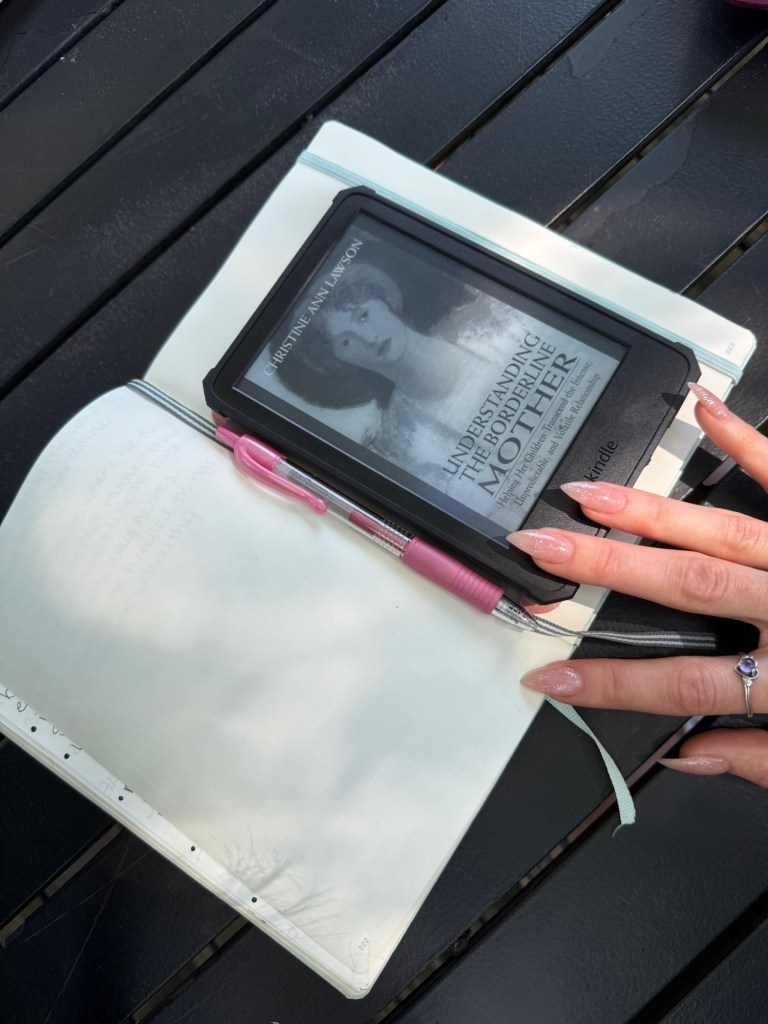
This book took me over five years to finish. Not because it was long or dense—but because it hurt. Some pages made my stomach turn. It dug up memories I had buried so deep, I forgot they existed. Things that were so wrong—and I knew they were wrong—but I ignored them to survive. Because acknowledging them would mean facing the reality that my own mother didn’t always have my best interest at heart. And that kind of pain is almost too much for a child to carry.
Worse, because mothers with BPD are often skilled at masking—appearing warm, selfless, or even charming in public—no one ever believes the child. You grow up in this warped emotional reality, desperate for someone to see it. But they don’t. And so you start to question yourself instead.
That’s what happens when mothers don’t heal before having children. Their pain becomes their lens. Their fear becomes their filter. And eventually, it’s all projected onto the child—until it becomes the child’s reality.
Reading Understanding the Borderline Mother didn’t just validate what I went through—it reminded me of something life-changing: You are not your mother. You are not your upbringing. You are not your trauma. Once you acknowledge that you are separate from your parents, their wounds, and the roles they cast you in, you can begin the process of reclaiming your truth.
That’s where healing starts. That’s where freedom begins.
Now that I’ve read this book cover to cover, I want to share what I’ve learned—not just about my mother, but about myself.
1. Borderline Personality Disorder Is Often Undiagnosed in Mothers
One of the most eye-opening parts of the book was learning just how many mothers may suffer from undiagnosed BPD. Dr. Lawson writes, “If researchers are correct in their estimate that approximately 6 million people in the U.S. suffer from BPD, the number of children living with borderline parents could be staggering.”
And yet, most go undiagnosed—especially mothers. Why? Because BPD is often masked behind high-functioning personas. Many people with BPD appear completely normal—loving, friendly, successful, even maternal—to the outside world. Meanwhile, behind closed doors, their children are subjected to emotional chaos.
My mother is diagnosed with Borderline Personality Disorder—but not until I was already an adult. The childhood damage was already done. Still, I admire her deeply for trusting me with that truth. Her diagnosis helped me understand her—and helped me release the guilt I carried for so long.
That said, understanding didn’t erase my anger. In fact, it made me even more angry for the child in me—who was innocent and needed a mother, not chaos. But through that anger, I found compassion. Today, I accept my mother for where she’s at, while fiercely protecting my peace, my boundaries, and my right to heal.
2. The Different “Faces” of a Borderline Mother Can All Exist Within One Person
Dr. Lawson outlines four major faces of the borderline mother: the Waif, Hermit, Queen, and Witch. While one of these may be more dominant, nearly every borderline mother embodies all four faces at different times.
The Waif is helpless and overwhelmed, using guilt and victimhood to gain sympathy.
The Hermit is fearful, critical, and controlling—obsessed with safety and perfection.
The Queen craves attention, loyalty, and obedience, punishing independence or disagreement.
The Witch is openly cruel, punishing, and rageful—emotionally or physically abusive.
These faces can flip instantly. One moment you’re being hugged, and the next you’re the enemy. That instability teaches children to walk on eggshells, never knowing who they’ll be dealing with.
And no matter what role the child plays, the borderline mother projects herself onto them. She cannot see her children as separate individuals with their own emotions and needs. She sees reflections—of her fears, failures, dreams, and wounds. Which means she cannot truly meet you where you are. And that lack of emotional attunement is devastating.
3. The Roles She Assigns to Her Children Are Deeply Damaging
Instead of nurturing her children based on who they are, the borderline mother often assigns them roles that serve her emotional needs. Dr. Lawson identifies three common ones:
The Golden Child is idealized and expected to reflect the mother’s greatness.
The Good Child is compliant and responsible—often acting as the emotional caretaker.
The No-Good Child is blamed for everything and used as the family scapegoat.
These roles aren’t fixed. You can shift from golden to no-good overnight. Children are often pitted against each other, manipulated to compete or prove loyalty. It fractures sibling relationships, but worse—it fractures your identity. You grow up unsure of who you are without someone else’s approval.
4. Her Romantic Partners Often Play a Role in the Dysfunction
In Understanding the Borderline Mother, Dr. Lawson notes that many borderline mothers are drawn to men who lack strong boundaries or who reinforce their distorted view of reality. These men often become part of the dysfunction—sometimes unknowingly.
Some are emotionally unavailable. Some are passive and avoid conflict at all costs. Others fear the mother’s rage and go along with her to keep the peace. But no matter how well-meaning they may appear, the result is often the same: they fail to protect the child.
Instead of being a safe haven, the father figure may:
Back the mother no matter what, reinforcing her narrative and making the child question their own reality.
Disengage entirely, leaving the child emotionally abandoned and alone to navigate the chaos.
Redirect blame, suggesting the child is “too sensitive,” “dramatic,” or “disrespectful” for expressing pain.
When I tried to speak up about what I was experiencing, I was often told things like:
“Don’t talk about your mom that way.” “You know how she gets.” “You’re making things worse.”
And just like that, I was silenced again. These dynamics don’t just confuse you—they train you to doubt yourself, to prioritize others’ comfort over your truth, and to betray your own instincts. The message is loud and clear: You’re the problem. So you start to believe it.In doing so, they invalidate your experience and teach you to deny your reality. You’re forced to trust the very person who’s hurting you. And you grow up confused, hypervigilant, and ashamed of your truth.
5. The Chaos Wasn’t My Fault
When love and cruelty come from the same person, it scrambles your sense of self. I spent years trying to be “perfect” to earn safety. I went to church by myself. I swore I’d never lie. I tried to be so good she’d have nothing to criticize. But she always found something.
Eventually, I gave up. I started lying. Sneaking around. One extreme to the other—just trying to survive a reality where no version of me was ever enough.
This book helped me see it clearly: I didn’t cause the chaos. I was responding to it the best I could. And that realization gave me the self-forgiveness I desperately needed.
6. Gaslighting Can Be Disguised as Kindness
Abuse doesn’t always look like yelling or slamming doors. Sometimes it sounds like “I love you.” Sometimes it ends in a hug.
After screaming, accusing, or punishing me, my mother would often want to “make up” within hours. She’d act like nothing happened, or worse—like it was somehow mutual. And I knew I had no choice but to go along with it.
So I’d say sorry too. I’d hug her. I’d comfort the very person who had just hurt me. And I’d push down my anger, my truth, and my needs—again.
It’s a mind game that teaches you to invalidate your own pain. But this book gave me the words to reclaim that truth. It helped me stop gaslighting myself—and start honoring the little girl who never got to be fully real.
7. Boundaries Aren’t Cruel—They’re Essential
Setting boundaries with a borderline mother often feels like betrayal. You’re conditioned to believe that your existence is an extension of hers—and that saying “no” is selfish, cruel, or ungrateful.
But the truth is, boundaries are the only way to have a healthy relationship with a BPD mother—if one is possible at all.
They’re not about punishing her. They’re about protecting yourself. They’re how I stopped living in reaction mode and started creating space for peace, healing, and self-respect.
8. You’re Allowed to Grieve the Mother You Didn’t Get
There’s a specific grief in realizing your mother may never be who you needed her to be. A grief that doesn’t come from what happened—but from what didn’t.
Sometimes I resent the years I lost to trauma. I ache for the version of me that could’ve existed if my inner world had been nurtured instead of dismissed. But I remind myself—this journey made me who I am.
The fire shaped me. The healing empowered me. And the grief, while heavy, has also made space for compassion.
9. Breaking the Cycle Starts With Awareness
The cycle ends with the one who chooses to look inward. Reading this book wasn’t just educational—it was transformative.
I cried. I journaled. I talked about it with my partner. I even began applying tips from the book in real-time with my mother.
And it changed everything—especially how I see myself. I began showing up differently in my relationships. I stopped absorbing other people’s pain. I stopped shrinking to avoid conflict. I stopped blaming myself for not being lovable enough.
I’m not perfect. But I’m present. And I’m healing—on purpose.
💬 Let’s Keep the Conversation Going
✨ Leave a comment and share something you’ve learned about yourself in your own healing ✨ Send this post to someone who might need clarity, comfort, or courage ✨ Bookmark this blog for more reflections on breaking cycles, reclaiming your identity, and coming home to yourself
You deserve peace. You deserve joy. You deserve a life that feels like yours. Let’s keep healing—together.







 INTERTWINEDIVINE